R O Plant
An RO Plant (Reverse Osmosis Plant) is a water purification system designed to remove impurities, contaminants, and dissolved salts from water using reverse osmosis (RO) technology. It’s widely used for drinking water purification, industrial processes, and wastewater treatment.
Reverse osmosis is a filtration process that forces water through a semi-permeable membrane under high pressure.
The membrane allows pure water molecules to pass through.
Dissolved salts, minerals, and impurities are left behind and flushed out as reject (brine) water.
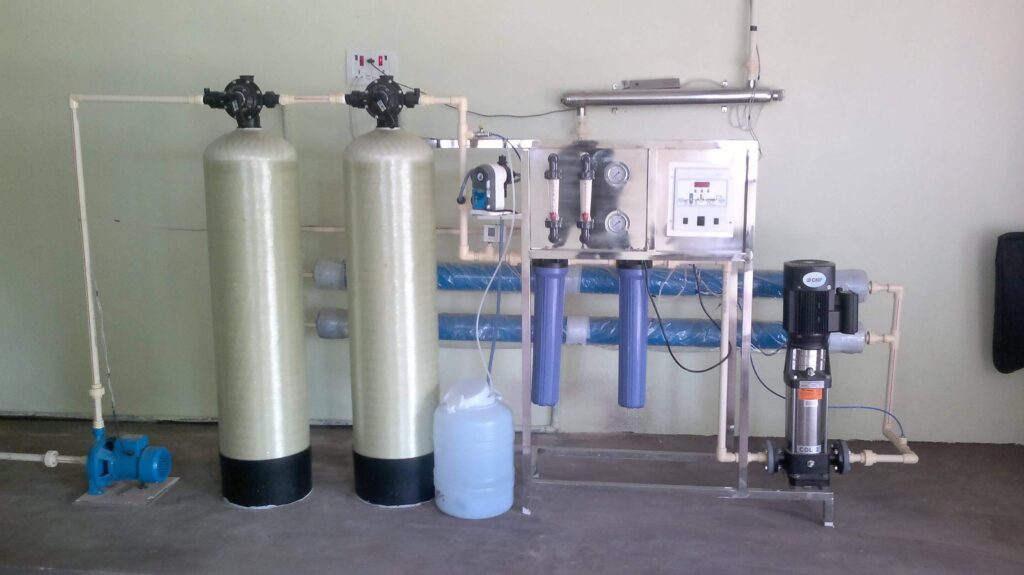
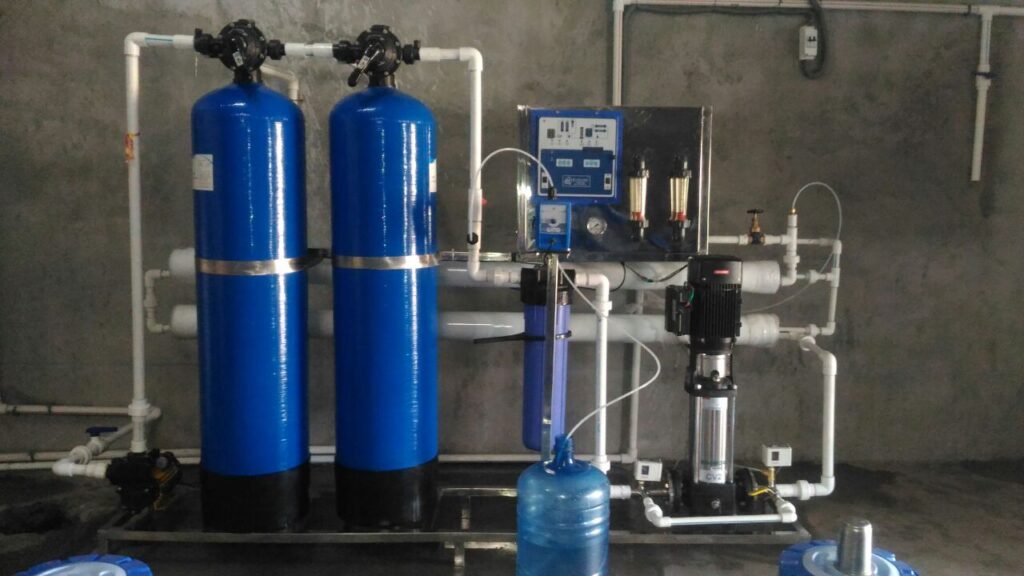
Feed Water Pump – Increases pressure to push water through the system.
Pre-filtration System – Removes suspended solids, sand, and chlorine using sediment and carbon filters.
High-Pressure Pump – Provides the necessary pressure for RO membrane operation.
RO Membrane – The core component that removes dissolved salts, heavy metals, and microbes.
Post-Treatment Unit – Enhances taste and adjusts pH (e.g., UV sterilizer or mineralizer).
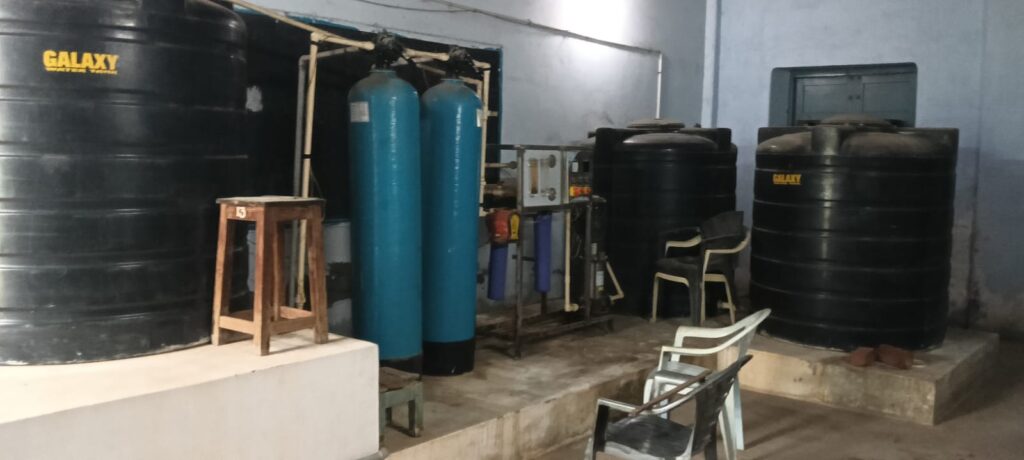
Storage Tank – Stores the purified water.
Reject Line – Discharges concentrated impurities (brine water).
Working Process
Pre-Treatment – Raw water passes through filters to remove sediments and chlorine.
Pressurization – The pump forces pre-treated water through the RO membrane.
Separation – Pure water (permeate) is separated from impurities (reject water).
Post-Treatment – Final polishing or disinfection ensures drinking water quality.
Storage & Distribution – Clean water is stored for use.